

The Voting Rights Act of 1965 is at the center of a major legal battle before the Supreme Court of the United States, involving congressional redistricting disputes in Louisiana.
The case, commonly referred to as Louisiana v. Callais, has привлечено national attention as Americans search for Supreme Court Louisiana case and Voting Rights Act 2026 ruling to understand its potential impact.
What Is the Case About?
The case focuses on whether Louisiana’s congressional district maps comply with protections outlined in the Voting Rights Act.
Key Issues:
- Fair representation of minority voters
- Legality of current district boundaries
- Compliance with federal voting rights protections
- Interpretation of past legal precedents
👉 Searchable phrases included:
- Supreme Court Louisiana case
- Voting Rights Act 2026 ruling
- Louisiana redistricting case
Background: Voting Rights Act of 1965
The Voting Rights Act of 1965 was enacted to eliminate racial discrimination in voting.
Key Provisions:
- Prohibits discriminatory voting practices
- Protects minority voter representation
- Allows federal oversight in certain cases
This law remains a cornerstone of US election law and continues to influence modern legal challenges.
Why Louisiana Redistricting Is Controversial
Redistricting determines how electoral district boundaries are drawn.
Main Concerns:
- Whether maps dilute minority voting power
- Fairness in political representation
- Potential partisan advantages
- Legal compliance with federal laws
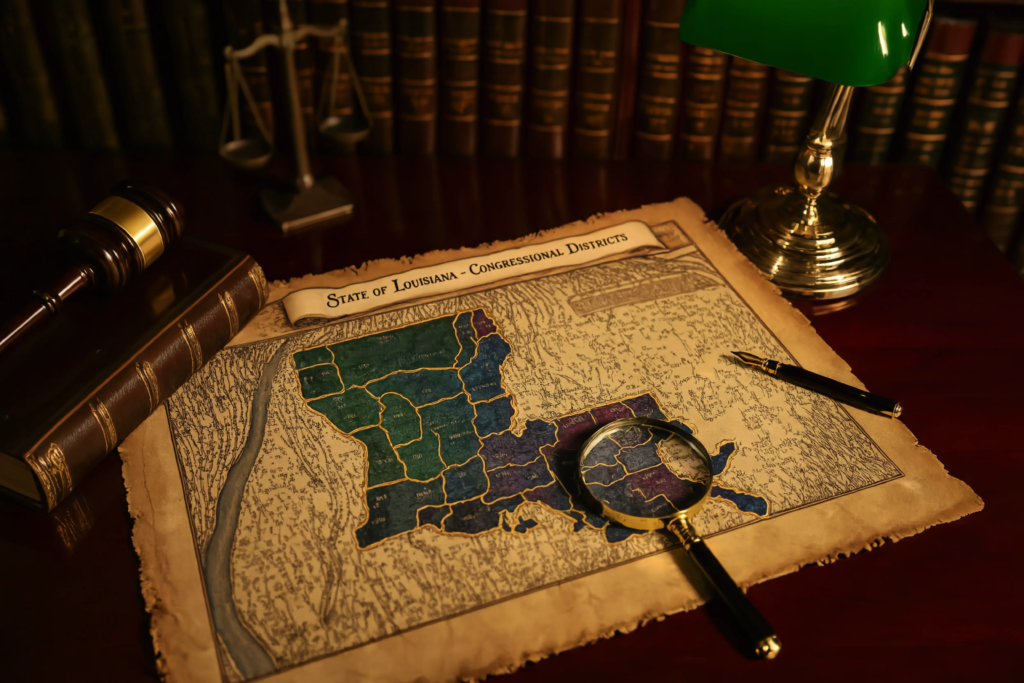
Image Placeholder: Map of Louisiana congressional districts
Alt Text: Louisiana redistricting map Supreme Court case Voting Rights Act
Role of the Supreme Court
The Supreme Court of the United States will decide whether Louisiana’s district maps violate the Voting Rights Act.
Possible Outcomes:
- Upholding current district maps
- Requiring new district boundaries
- Setting new legal precedents
Potential Impact of the Ruling
The decision could have wide-reaching consequences:
Election Laws
- Changes to how districts are drawn
- New standards for compliance
Political Representation
- Increased or reduced minority representation
- Shifts in political power
Future Legal Cases
- Influence on similar cases nationwide
- Clarification of Voting Rights Act interpretations
Why This Case Is Trending
- High national importance
- Impact on elections and democracy
- Public interest in voting rights
- Ongoing legal debates
FAQs
What is Louisiana v. Callais about?
It focuses on whether Louisiana’s district maps comply with the Voting Rights Act.
Why is the Voting Rights Act important?
It protects against discrimination in voting and ensures fair representation.
What could change after the ruling?
District boundaries, election laws, and minority representation could be affected.
Conclusion
The case involving the Voting Rights Act of 1965 and the Supreme Court of the United States represents a critical moment in US election law. With potential impacts on redistricting, representation, and future legal standards, this decision is being closely watched nationwide.
👉 Stay informed on Voting Rights Act 2026 ruling and Louisiana redistricting updates to understand how it may shape the future of US elections.